
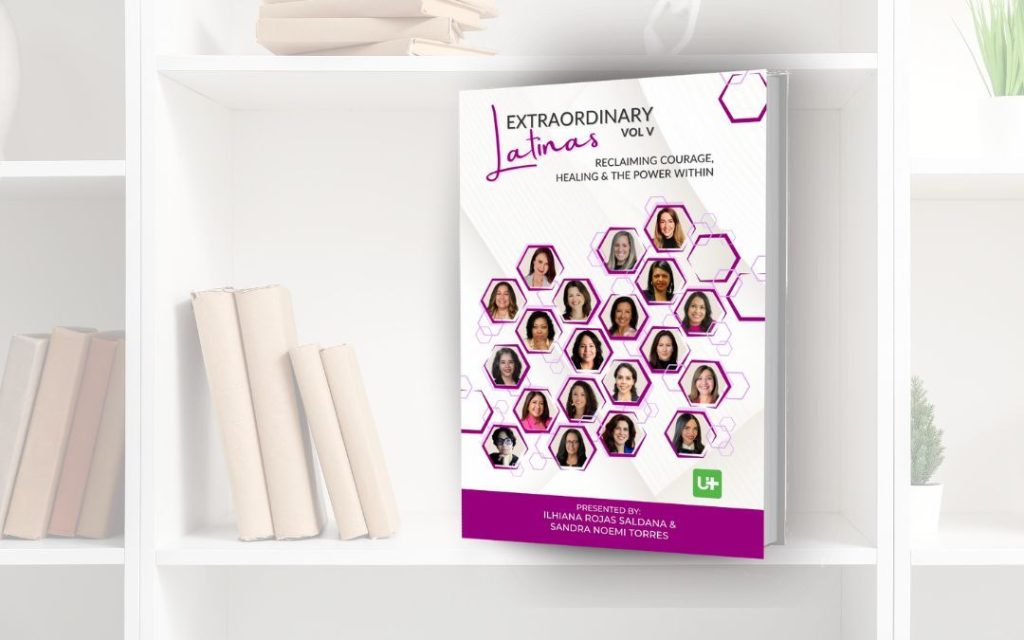
In her Extraordinary Latinas chapter, Sierra Domb reflects on chronic illness, including Visual Snow Syndrome (VSS), Autoimmune Dysregulation (AD), and Erythromelalgia (EM), alongside bullying, medical trauma, and a lifelong experience of difference and nonconformity. As Founder of the Visual Snow Initiative, she shares how fear, dismissal, and isolation were transformed into purpose through global research collaboration and advocacy for underrecognized neurological and health conditions, particularly VSS.
The chapter explores resilience, authenticity, and challenging societal norms, especially for women and individuals with invisible illness. It emphasizes that while health, systems, and others’ perceptions are often beyond control, our responses shape character. Sierra highlights embracing complexity, where intellect and empathy, science and creativity, and grief and hope coexist, while reframing strength as persistence, compassion, and self-awareness rather than perfection.
In 2026, Extraordinary Latinas Vol. V became a #1 Amazon Best Seller and #1 New Release, featuring Latina leaders who continue breaking barriers and inspiring change.
Sierra’s chapter, “Transforming Pain into Progress: A Life Shaped by Illness, Resilience, Inquiry, and Action,” is available to read below.
From Sierra Domb:

“This chapter is dedicated to all who suffer, feel different, unheard, or unseen, and to those who remain kind, offer support, take action, or try their best despite life’s hardships.”
“We cannot choose the health or appearance we are born with, nor how others will treat us, but how we respond shapes our character. Do not fear being different. Suffering is inevitable, but leaving it meaningless is optional. Amidst injustice or hardship, let your actions foster resilience, kindness, and the change you hope to create for yourself and others, knowing that as long as you try your best, that is enough.”
–Sierra Domb
Introduction
From the moment I was born, I had no choice but to stand out. Even when I longed to fit in, I often felt judged for my health, my appearance, and my personality, which did not match society’s expectations. From an early age, I understood that society often assigns value and treats people unkindly based on superficial traits or circumstances beyond their control, particularly women, and especially those living with medical challenges. Not fitting in taught me to think independently, to question societal norms, many of which are rooted in long histories of injustice and prejudice, and to reject narratives that prioritize appearance, conformity, and idle chatter over substance and constructive action. I hope readers take away that embracing difference, forging their own path, practicing self-care, and cultivating kindness are important acts of resistance and liberation.
For anyone who has faced challenges not of their choosing, I hope they feel empowered to reclaim control by shifting their perspective and transforming the pain of those challenges into purpose, whether that purpose leads to positive change for others in similar situations or to learning to accept, love, and honor themselves for surviving. Do not fear being different. The path may be lonely at times, but it also has the power to attract a life shaped by authenticity, courage, knowledge, and, with intention and effort, to make a positive difference in your own life and in the lives of others.
The Journey
My life has been shaped by medical struggles, loss, and profound physical and emotional challenges, experiences that provoked reflection, cultivated resilience, questioned conformity, and guided me to approach the world with open-mindedness, compassion, and a drive to make a positive impact. These formative years were defined by what my body demanded and what my mind had to navigate. My path to founding a global nonprofit, working in health communication, and collaborating in medical research began long before I understood the challenges ahead.
Since childhood, I struggled with Autoimmune Dysregulation, a chronic immune condition, and Erythromelalgia, a neurovascular disorder. I juggled school, activities, and social life while navigating chronic pain, frequent medical appointments, and periods of being immunocompromised. I maintained a composed exterior to meet societal expectations while silently enduring pain. The visible effects of my conditions made hiding impossible, and daily bullying became routine. I built walls around myself, always on the defensive, longing to be healthy and “normal”.
By young adulthood, both conditions were largely managed through medication and lifestyle adjustments. University marked a turning point: life felt full of possibility, and my goals seemed attainable. I embraced opportunities in writing, photography, studying communication, and hosting a campus radio show. These experiences led to commercial and animation voiceover work, prompting me to pause my studies and move to Los Angeles.
While in Los Angeles, I learned that someone close to me was terminally ill. I returned to Miami to care for them until their passing. During that time, they encouraged me to resume my studies. After their death, I returned to the University of Miami, weighed down by loss, mortality, and the helplessness of witnessing suffering I could not stop.
In 2015, at age 21, I developed Visual Snow Syndrome (VSS). My symptoms began subtly, then later that day my vision went black while driving. When it returned, I faced relentless visual and sensory disturbances including flashing lights, double images, distortions, tinnitus, paresthesia, derealization, brain fog, and migraines. Fear consumed me as I tried to understand what was happening.
Doctors were unfamiliar with VSS, misdiagnosing me and warning of possible blindness or death. I struggled to explain a disorder I barely understood, and some questioned my sanity. Every medical test showed nothing abnormal. Unable to work, drive, attend classes, or recognize familiar places or loved ones as I once knew them, I left school again consumed by fear of losing my sight or life. I soon learned I was one of millions worldwide with VSS, who were disbelieved and misdiagnosed.
A crucial discovery was an academic paper online describing VSS exactly as I experienced it. I contacted the author, neuroscientist Dr. Peter Goadsby, who confirmed my diagnosis and explained that VSS patients are still dismissed by medical professionals. Globally, resources and awareness were virtually nonexistent, leaving patients disbelieved, misdiagnosed, or falsely institutionalized. Only a handful of researchers studied VSS, and none had funding.
Seeking answers online, I also found others with VSS; some offered empathy, others hostility. A few urged me to end my life, conveying the condition and the medical community’s dismissal made hope impossible, and some responses turned disturbing after learning I was a woman. It was clear that countless people with VSS were suffering. The combination of severe symptoms and neglect by the medical community had devastating effects on both physical and mental health.
All my life, I resented my medical conditions for the pain they caused. Before VSS, I quietly adapted to challenges, striving for normalcy. VSS changed everything, arriving with debilitating symptoms yet without awareness, support, or solutions. Affecting 2-3% of the global population, it was a widespread neurological condition ignored by medicine. Faced with a grim outlook and millions affected worldwide, I felt compelled to act. I realized I could no longer hide my differences or fear judgment. As a coping mechanism and way to help others, I decided to turn my health challenges into a catalyst for positive impact.
In 2018, at age 23, I moved back to Los Angeles, organized the first Visual Snow Conference at UCSF to unite global researchers and individuals with VSS, and founded the nonprofit Visual Snow Initiative (VSI) to advance awareness, education, recognition, and research. I established a Global Research Team, sparking collaborations in seven countries and initiating funding at institutions including King’s College London and UCLA. Since then, VSS research has quadrupled, producing advances in biomarkers, pathophysiology, symptomatology, and treatment options. We created the first official diagnostic criteria, the first Global Physicians Directory, the first pediatric resources via VSI 4 Kids, a multilingual website, numerous educational materials, and online awareness content. I collaborated with the AnCan Foundation to launch the first VSS video chat support group and partnered with the Oxford Mindfulness Foundation to create a globally accessible app integrating evidence-based therapies for VSS’s neurological and perceptual features.
After being told it was impossible, I secured the first ICD-11 recognition of VSS and its hallmark symptom, visual snow, from the World Health Organization, a historic milestone in global clinical and scientific acknowledgment. I facilitated multidisciplinary research collaborations with institutions including MIT, UC Denver, University of Perugia, Monash University, University Hospital of Bern, Johns Hopkins, the Mayo Clinic, and more.
I also served on the International Advisory Board for the Columbia-WHO Center for Global Mental Health, addressing stigma, improving access in underserved regions, and highlighting marginalized medical topics in neuroscience and women’s health. I have spoken for the Erythromelalgia Association, delivered a TEDx Talk on VSS and VSI’s founding, and was recognized in the University of Miami’s 30 Under 30 list for global impact after completing my degree.
Integrating health and intercultural communication, neuroscience, behavioral sciences, qualitative analysis, and lived experience, my work translates research into accessible educational resources and actionable initiatives for diverse audiences, connecting professionals across disciplines to advance equitable knowledge sharing and address complex medical and systemic challenges. The models I have developed extend to other underserved conditions and global issues, laying the groundwork for progress guided by compassion, science, and collaboration.
Learnings
I have come to accept that while I can control my actions, so much remains beyond my control, including my health, how others respond to me, and the shifts happening around us all. I often wondered why life led me down certain paths, but I have learned that some things simply happen. All I can do is move forward, applying my skills where possible, stepping into new chapters, or adjusting my role as needed. Life often unfolds while we are busy making other plans, and all I can do is try my best.
Studying neuroscience, psychology, and human behavior revealed how much of what drives us happens beneath the surface. Our actions and beliefs are often shaped by layers of societal conditioning, personal experiences, insecurities, and projections we may not even recognize. While each of us is unique, much of who we are is influenced by unseen forces beyond our immediate awareness. People often believe their perspective is the one true reality. Understanding this helps us recognize that opinion is not fact and that it is important to consider the source of information. When someone says something is impossible, it may reflect their limited view rather than objective truth.
Many people told me what I set out to do was impossible. They questioned not only my goals but my very presence, suggesting that a woman with strong opinions who values intellect over appearances, along with sensitivity and kindness, would never find her place. My health challenges seemed only to strengthen their doubts. Yet the real challenge is not that I do not fit the mold, but that society expects everyone to fit into a single, narrow mold. So long as no harm is caused to oneself or others, differences should not only be accepted but celebrated. Yet many want others to conform to their views, often overlooking the richness of diverse perspectives and experiences.
Despite these doubts, I persisted. I forged my own path, refusing to let others define the limits of my potential. By showing up, taking risks, and remaining true to myself, we were able to make progress that might not have happened otherwise. This taught me a lesson I carry into all endeavors: innovation and change rarely come to those who wait for permission or certainty. Real impact arises when you embrace your full self, continue despite skepticism, and act to help others and challenge systemic injustice, even when it feels impossible.
Whenever you introduce something new, whether a creative work or an effort to improve a system, resistance is inevitable. It arises not because the change is wrong but because it challenges norms and comfort. Change can sometimes provoke skepticism or opposition. Embracing resistance allows you to refine ideas, strengthen resolve, and build understanding. Real progress happens step by step, and persistence despite doubt separates those who spark change from those who accept the status quo.
Letting yourself be seen honestly, flaws and all, is not weakness but a quiet strength. For a long time, I masked myself to make others comfortable. But even then, you cannot be everyone’s cup of tea. Genuine connections and experiences matter more than appearances or conformity. Life is always changing, from health to perspective, and while we do not have to welcome every change, we must live with them. I strive to grow, improve, and build what I can while treating myself with kindness, even if I am still becoming who I hope to be. Personal victories, however small, are worth celebrating.
Inspirations
My work has been shaped by my health challenges, particularly VSS, and by learning about the suffering of millions affected by overlooked conditions. Beyond this, I have always carried a deep sensitivity to injustice and empathy for those who struggle. Though often celebrated, these traits can feel heavy in a world where fairness and understanding do not always prevail. For years, I viewed my sensitivity as a burden, feeling others’ pain without the ability to change it. Over time, I realized it was not a weakness but a compass, guiding my advocacy and humanitarian work.
I am drawn to resilience, critical thinking, and the courage to challenge convention. Reducing a person to a single trait erases their depth. Society often forces people into narrow definitions, forgetting that humans are layered and multifaceted. Adversity, intellect, empathy, and strength can coexist and even strengthen one another. Life is rarely linear; struggle and progress, fear and courage, fragility and determination coexist. My identity is a mosaic of abilities, passions, and contradictions. Negative experiences can give rise to positive change, and exhaustion can coexist with perseverance. One can work in medicine or science and still love the arts. One can strive to solve complex problems while needing lighthearted moments. Holding space for both seriousness and joy, logic and creativity, keeps us grounded and human.
My family laid the groundwork for these beliefs. Growing up in a multicultural household taught me that unity rests on respect and openness, not uniformity. Diversity enriches innovation and broadens understanding. My parents and grandparents taught that courage and empathy are intertwined, that strength lies in patience, integrity, and kindness, and that doing your best without expecting perfection is enough. They taught me to speak up even when others tell me not to.
My significant other and best friend has been my steady anchor through every high and low, showing that true love blends attraction and compatibility with support, growth, dedication, desire, celebrating differences, and treasuring each other’s authenticity. Together, our love makes anything feel possible.
My sister-figure and best friend, who passed too soon, showed me the power of artistic expression and embracing difference. What once made me feel isolated became a source of direction, teaching me to face hardship with creativity and empathy.
I am grateful to everyone who has supported me and believed in my causes, especially my teammates whose intelligence, care, and tenacity made VSI a reality. Hearing from people affected by VSS and other health issues in 93 countries, I am honored to positively impact even one person’s life.
I have learned the value of reflection, adaptability, and intention. Inspiration evolves through people, experiences, and challenges. It grows through every encounter, struggle, and shared moment of humanity. This blend of insight, persistence, and compassion drives me to create change, guided by the belief that within hardship lies the seed of progress and within pain, the possibility of purpose.
What defines my work is a willingness to explore unconventional solutions when traditional ones fall short. I do not accept impossibility simply because it has not been done. I rely on analysis, creativity, and independent thought. When I believe in something, I take an uncharted path. The only way to know what is possible is to try, and I commit fully, even when outcomes are uncertain.
I am passionate about bringing humanity back into medicine and science. These fields need not feel distant or sterile; clarity and empathy benefit both professionals and patients. I connect individuals across disciplines, identify shared goals, and merge complementary strengths to create real solutions. Collaboration between patients, clinicians, and researchers is essential, as lived experience provides insights that data alone cannot capture. Beyond validation, people need practical resources and accessible education to navigate their realities. I hope to continue building bridges through culturally relevant resources, global collaborations, and honest conversations that break health stigmas, ensuring individuals are acknowledged and their perspectives recognized.
Advice
Not fitting in taught me to think independently, to question societal norms, many of which are rooted in long histories of injustice and prejudice, and to reject narratives that prioritize appearance, conformity, and idle chatter over substance and constructive action.
It is unrealistic to feel happy every moment of every day. Society promotes the illusion of constant contentment, but reality is far more complex. There is much suffering in the world, and many have endured far worse than I have. These realities are not a reason for pity but an invitation to awareness, empathy, and positive action. I do not believe every hardship has a grand design, but I do believe we can choose to make meaning from our experiences. Often, the most difficult moments open doors we would not have otherwise found, shape us into stronger people, or bring irreplaceable individuals into our lives. I look for any good that might emerge from the bad, whether it is wisdom, resilience, empathy, or clarity about what truly matters. At the same time, I accept that some pain is simply pain, and survival alone can be enough.
Success is a subjective term, and the same goes for failure. For me, it is not simply a matter of pass or fail; it is about putting in your best effort and doing everything you can while recognizing that some obstacles will always be out of your hands. Accepting this makes it easier to focus on what you can change and keep moving forward. What matters most is continuing to move forward and giving your best, because without that, nothing changes and the outcome remains fixed. No matter how challenging or unpredictable life may be, I act with intention, balance perseverance with self-compassion, and embrace both perceived setbacks and successes as part of the journey.
Ultimately, what you contribute to the world is your responsibility. Whether you lift someone up or dismiss them, your choice reflects your character. We never fully understand what others face, and some may lack empathy. Sometimes what matters most is not the setback itself, but how you respond. Did you show up despite the challenges? Did you try to improve something for yourself or someone else? Did you continue moving forward when stopping would have been easier?
I have learned to stand in uncertainty with resilience and adaptability. I show up even when outcomes are unclear, value reflection and growth, and measure progress by effort as much as result. Personal growth and helping others, whether through daily acts of kindness, listening, sharing insights, creating resources, or contributing on a larger scale, hold significance even when they require facing challenges and discomfort.
An important component of my work is that it goes beyond research alone. It is about bringing multidisciplinary collaboration and humanity back into medicine, closing gaps between science, patients, and everyday understanding. I believe in accessible, practical, evidence-based communication that connects people across different fields, levels of health literacy, and cultural backgrounds. By blending various perspectives and ideas, we can create comprehensive, well-informed solutions to challenges that once felt insurmountable. Striving to achieve something unprecedented requires embracing the unknown and exploring paths others have not yet imagined.
Different cultures, influences, and interests do not cancel each other out; they bring complexity, perspective, and variety to life. After all, we all bleed red. As long as no one is causing emotional or physical harm to themselves or others, differences can coexist, be appreciated, and even expand our horizons. Through respectful dialogues and global teamwork, these differences have the potential to help us build a better world together.
At every funeral I have attended, no one mentions looks, business success, perfect health, or academic records. What endures is how a person treats others and the feelings they inspire. Kindness, compassion, and genuine connections outlast any external measure of success. I am grateful for the support of loved ones and advocates, and for the lessons forged through anguish: resilience, self-care, persistence, critical thinking, nonconformity, innovation, curiosity, and a multifaceted identity blending science, creativity, and humanity.